



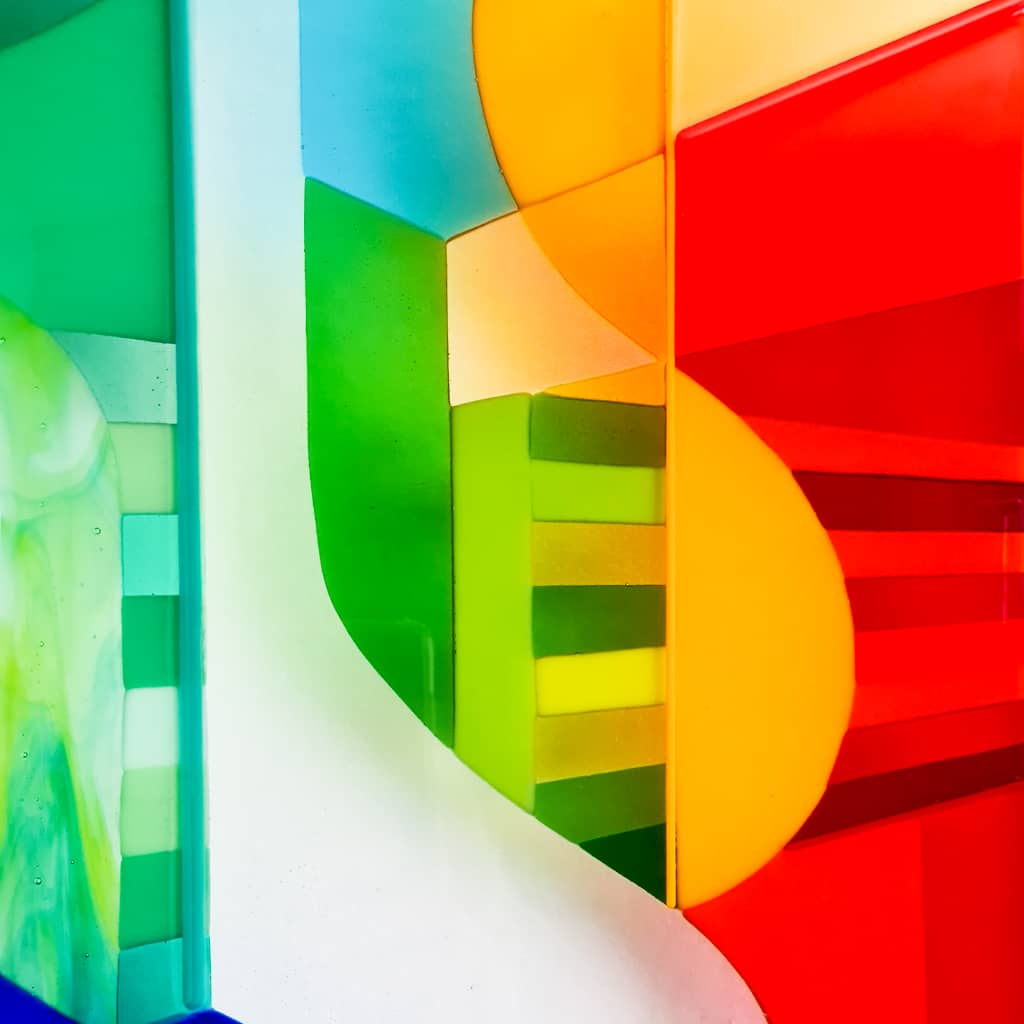


Imagine opening the doors to an art gallery one summer morning.
By lunchtime, 385 people have wandered inside. They've all stopped in front of the same three artworks.
Surely they'll all notice the same thing?

They don't.
Last month, our Summer Prize Draw attracted 385 entries from art lovers around the world. Alongside choosing the artwork they'd most like to win, entrants answered a handful of simple questions about how they experience art.
We started with an open mind, rather than preconceived views.
And this helped, because we discovered almost by accident:
How people decide whether a work of art belongs in their lives.

We don't all enter through the same door
Our first question was simple.
What catches your eye first in a work of art?
- Colour
- The subject
- Shape and pattern
- Light
Colour attracted the largest group of people, but hundreds actually began somewhere else.
For example, some were drawn first to bold colour.
Others immediately warmed to the subject.
Some admired the precision of the design.
The free text comments in the questionnaire told the story.
"The colours draw me in before I even realise what I'm looking at."
"The butterflies remind me of my mum."
"It's the crispness of the design."

There isn't a correct way to experience art. We all enter through a different door.
There isn't a correct way to look at art.
Every visitor enters through a different door.
Memory chooses far more art than taste or judgement
Big surprise here.
Before reading the responses, we assumed people would explain why a piece of art was good.
Instead, they explained why it mattered.
One person remembered family meals.

Another saw South Africa.
Another the Portuguese Camino.


Someone else wrote: "Birds of Paradise grew right outside my door."
Others mentioned Provence, Hawaii, Egypt, childhood gardens and loved ones.

Very few people discussed artistic technique.
They talked about places.
Families.
Journeys.
Home.
The artwork became a key that unlocked memory.
This distinction ended up being the key point:
We often think buying art is an exercise in judgement.
These responses suggest it's often an act of recognition.
Perhaps we don't choose art because we admire it.
Perhaps we choose it because, somehow, we recognise ourselves inside it.
Art doesn't live on walls. It lives in rooms.
Which room would you most like to see new artwork in?
At first glance, it sounds like an interiors question.
It wasn't. People weren't choosing walls.
They were choosing moments in their lives.
The living room was the most popular choice, but almost nobody said it was because they had space.

Instead they talked about family. Conversation.
Sharing something beautiful.
"It's where more people see the piece, which gives a topic of conversation."
The home office produced some of the most personal responses.
People wanted encouragement.
Inspiration.
Beauty beside them while they worked.
One respondent, after finally earning a hard-won promotion, wanted something uplifting behind their desk.
Another wanted a strong female image looking back at her each day.
"Something beautiful to look at all day. Much nicer than my laptop!"
Hallways weren't simply corridors.
They were first impressions.
Welcome homes.
The first hello.
The last goodbye.

Bedrooms became places of calm and reflection.
"When I wake in the morning, this is what would start my day off better, with a happy smile. So brilliant, bright and happy."
Dining rooms became places of celebration, conversation and family.
"Enjoying a meal surrounded by beautiful art can feed your eyes as well as your palate"
Reading these answers, one thought kept returning.
People don't simply choose where artwork will hang.
They choose when they most want it beside them.
Perhaps every artwork has three creators.
THE ARTIST WHO MADE IT.
THE PERSON WHO LIVES WITH IT.
AND THE ROOM WHERE IT COMES TO LIFE.

Colour is the invitation. Meaning keeps us looking.
Colour was the most common first response.
That wasn't surprising. Colour is immediate.
It catches our attention before we've had time to think.
But very few people stopped there. They didn't simply say, "I like blue."
They wrote things like: "The colours remind me of summers in my garden."
"This is just such a cheerful, "let's celebrate life" kind of piece. It instantly makes you happy."
"Everything in my house is muted... your work is the complete opposite, and that's exactly why it makes me smile."

Actually, this confirmed what we already thought.
Art doesn't always reflect the life we already have.
Sometimes it reflects the life we want to feel.
Colour opens the conversation. Meaning keeps it going.
Artists don't stop being human
Because the questionnaire separated out Artists, Art Lovers and Collectors, we wondered if artists would answer differently from everyone else?
Would they become more technical?
A little.
Artists noticed shape and pattern slightly more often.
They appreciated precision.
Balance.
Construction.
But underneath, they sounded remarkably like everyone else.
Again they talked about memories.
Places they'd lived. Family. Inspiration.
One artist wanted the artwork because it reminded them of home.
Another because it would inspire them in their own studio.

Another simply wrote: "All rooms need art :-)"
Our artistic experiences might change our vocabulary.
But it doesn't change our hearts.
Whether artist, collector or simply someone who loves beautiful things ...
We all remain wonderfully human.

Ideas for art galleries to consider
None of these observations are rules.
They're simply the things we noted after reading hundreds of thoughtful responses.
- Visitors don't all see art in the same way
- Memory often matters more than artistic vocabulary
- People imagine living with artwork long before they imagine buying it
- The room becomes part of the artwork's emotional meaning
Perhaps the biggest lesson was also the simplest.
Tick boxes tell us what people chose.
Free-text answers tell us why.
And the "why" turned out to be infinitely more interesting.
Seven things art lovers taught us
We expected the artists’ responses to sound technical.
Most spoke about memories.

We expected colour to dominate the replies.
Instead, memory ran strongly alongside it.
---
We expected people to choose specific rooms.
Instead, they described the moments that happen in those rooms.
---
We expected lots of ‘room-decoration’ type of comments.
Instead people talked about identity, and who they are.
---
We expected one-line opinions.
But people told whole stories.

We expected logical reasons and justifications for buying art.
Yet what people revealed was memories.
---
Most of all, we expected to learn about peoples’ perceptions of art.
Instead ... we learned about people.
We don't choose art. We choose ourselves.
Two people can stand in front of exactly the same artwork.
One sees colour.
Another sees their childhood.
One notices precision.
Another remembers their mother.
One imagines the changing light in a favourite room.
Another imagines the conversations it will spark around a dining table.
The artwork hasn't changed.
The people have. Perhaps that's why choosing art has always been so difficult to explain.
It isn't simply about finding something beautiful.
It's about recognising something that already exists inside you, through the medium of art.

The survey began with three artworks.
It ended with 385 stories.
And perhaps that's the real mystery of collecting art.
WE DON'T FALL IN LOVE WITH ART BECAUSE WE UNDERSTAND IT.
WE FALL IN LOVE WITH IT BECAUSE, SOMEHOW, IT UNDERSTANDS US.
Leave a comment
Your art opinion blog
View all


ABOUT THE AUTHOR
“Hi, I’m Kevin, Linda’s lifelong soulmate. I’m a professional scriptwriter by trade, for which I’ve won many awards.
My mission is to bring Linda’s genius for colour & form into plain words everybody understands and enjoys.”
