



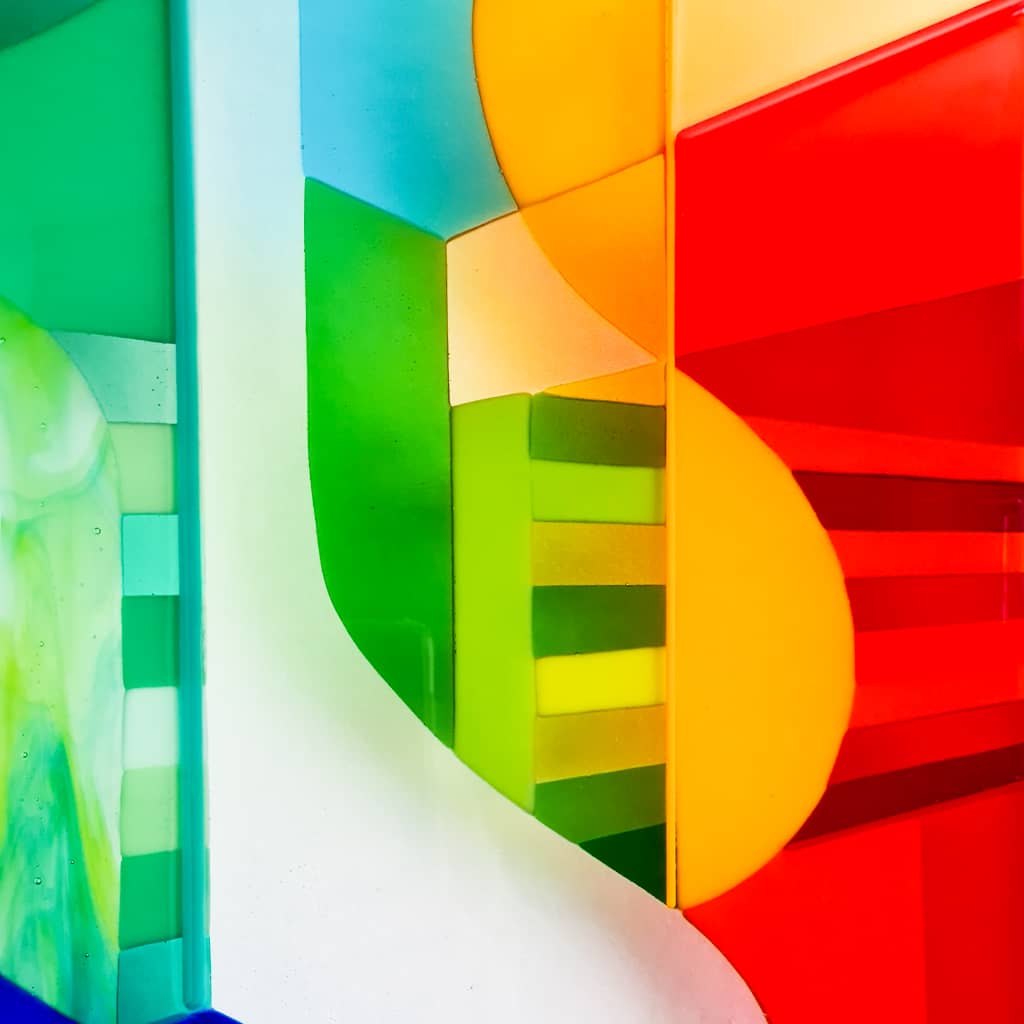


Why do some beautiful homes become places we love, while others gradually lose their pull?
There are homes that take your breath away the moment you walk through the door.
Wonderful architecture. Beautiful furniture. Perfectly considered colours, textures and lighting. Everything feels right.
You'd love to live there.
Or would you?

This looks amazing. But do you actually want to live there?
Think of a magnificent second home.
Spectacular location, fabulous interiors, every comfort imaginable. At first, arriving is a thrill. You count the days until your next visit.
Then, somehow, the excitement fades. You start going less often. Other destinations beckon. That wonderful house becomes somewhere you could go, rather than somewhere you can't wait to be.
What's happened?
The house hasn't lost its beauty. The view hasn't changed. The furniture is still exquisite.

Do you just admire the idea? Or do you actually want to be there?
So what has it lost?
Perhaps nothing. Perhaps something vital was never quite there in the first place.
Because admiring a place and loving being there are two very different experiences.
People are complicated. That's what makes design interesting.
Interior designers work with colour, light, form, texture and proportion.
But perhaps their most fascinating material is human personality.
And people are complex creatures, full of mixed feelings, ambitions, attachments and contradictions. That's normal. More importantly, those feelings are part of the fabric of a designer's creative ideas.
A client may want a serene, minimalist interior, yet adore a brilliantly colourful artwork.
Someone who insists they don't care what other people think may secretly love having the most talked-about room in the neighbourhood.

That odd blue vase? But it's exactly what they wanted :)
Another might spend a fortune creating a sophisticated contemporary home, then insist on keeping an old chair that clashes with everything.
Why?
That's the interesting question.
Why does this particular object matter? Why does that colour excite them? Why do they want their home to feel a certain way? And what is it about that feeling that matters so much?
The first answer isn't always the most revealing.
The best designers understand this instinctively. They look beyond the brief, discovering the enthusiasms and emotional connections that make someone an individual.
And the rewards can be exhilarating.
Because when a client's personality meets a designer's creative imagination, the result can be far more interesting than either originally imagined.
Particularly when someone introduces an unexpected challenge.
“Can you do this in black and white?”
British Hard Edge glass artist Linda Rossiter is known for brilliant colour and bold geometric compositions.
Then she met Lisa Proctor.
Lisa, an art collector in Maryland, lived in a striking modern home where practically everything was black, white or grey.

She loved Linda's work. The striking shapes, the energy, the graphic confidence.
But there was a problem. Colour.
“Can you do this in black and white?”
For an artist whose work thrives on colour, that's quite a question.
Yet Lisa wasn't asking Linda to abandon her artistic identity. She loved what Linda did. She simply wanted it expressed in a way that belonged in her world.
Linda embraced the challenge.

The result was Mono Lisa, a dramatic composition in black, white and grey, unmistakably Linda's work, yet something she might never have created without Lisa's intervention.
And when Lisa's family saw it in her home, their reaction said everything.
“That is so you.”
Four words. What a result.
They recognised Lisa in the art. Her taste, her confidence, her personality. The artwork belonged to her in a way that went well beyond ownership.
And Linda had pushed her creativity somewhere new.
You can read the story of Mono Lisa here.
That's what makes personal commissions so interesting. Individual taste isn't necessarily a constraint on creativity. It can be the very thing that releases it.
Happiness can be intensely personal
Aleta Doran was moving into a new home when she commissioned Linda to create two artworks commemorating her parents.
Aleta was already an experienced glass collector. She understood the beauty of the material and the pleasure of living with art.
But these two pieces were different.
One celebrated her mother's love of gardening and irises. The other remembered her father's connection with the sea.

To anyone visiting, they're beautiful, colourful glass artworks.
To Aleta, they're something else entirely.
Her mother's piece hangs in the hall, where she sees it every time she arrives home.
“Whenever I open the door to my house, it's the first thing I look at. And it makes me happy.”
That's quite a return on a piece of art.
No grand statement. No need for visitors to understand the story. Just a moment of genuine happiness, repeated every time she comes through the door.
It's easy to underestimate the power of these private connections.
We spend a great deal of time thinking about how interiors look. But the feelings they provoke can be far more enduring.
What makes someone smile when they walk into a room? What do they love seeing? What reminds them of something important, or makes them feel particularly good about their life?
Those feelings can be every bit as powerful as the visual impact of the room itself.
And sometimes we want to show off a little
Not all personal meaning is private. Far from it.
Another of Linda's collectors had moved to a beautiful riverside home in Beaulieu, a distinguished community with a thriving yachting culture.
Their house, inspired by Frank Lloyd Wright, combined Mid-Century Modern influences with a strong connection to its surroundings.
And they had something worth celebrating: life on the river.

Linda created Beaulieu River, a vibrant glass roundel featuring a distinctive scow sailboat.
It was visually striking, perfectly at home in its architectural setting, and unmistakably connected to the owner's world.
But there's another dimension to it.
The boat, the river, the sailing community, the pleasure of sharing that world with friends who appreciate it.
There's pride in that. Social distinction, too. And why not?
People enjoy expressing what they've achieved, the things they're passionate about and the communities they belong to.
A beautiful yacht isn't only about sailing. It can represent freedom, achievement, friendships and an entire way of life.
An artwork that captures those feelings does something more interesting than decorate a wall.
It gives its owner something to celebrate.
Personal meaning belongs at the centre of the designer's palette
Consider these three commissions.
Lisa wanted an artwork that reflected her uncompromising aesthetic.
Aleta wanted to keep the memory of her parents close, in the home where she was beginning a new chapter.
The Beaulieu collectors wanted to celebrate the sailing world they loved, with a little well-earned pride.
Three different clients. Three different motivations. Three artworks that could never have been interchangeable.
And that's the fascinating part.
Personal meaning isn't one emotion. It might be love, memory, pride, ambition, nostalgia, excitement, belonging or the sheer pleasure of having something that feels uniquely yours.
Often it's several at once.
Understanding those feelings gives a designer another dimension to work with.

Colour changes how a room looks. Light changes how it behaves. Proportion gives it harmony.
Personal meaning gives someone a reason to care about it.
It should be central to the designer's palette, not something added when the important decisions have already been made.
Commissioning art offers a particularly exciting way to explore this.
- The designer brings an understanding of the interior and its architecture.
- The artist brings an independent creative imagination.
- The client brings the personal motivations that give the whole exercise its purpose.

It's a creative relationship with possibilities that go well beyond finding the right artwork for an empty wall.
And it needn't involve commissioning anything. An inherited chair, a painting bought on holiday or a treasured collection can carry just as much emotional weight.
The point is to recognise what those things mean, and let that understanding influence the creative choices.
The real test of a beautiful room
Which brings us back to that magnificent second home.
Why do some owners return to their favourite places at every opportunity, while others gradually lose interest?
Comfort matters. Beauty matters. Architecture, surroundings, wonderful design. Absolutely.
But so does the feeling of being somewhere that reflects who you are, what you love and the life you've made for yourself.
Somewhere that gives you pleasure before you've even opened the front door.

A beautiful interior can impress almost anyone.
Creating one that its owner genuinely loves is a far more interesting achievement.
And perhaps the real test isn't how the room looks in a magazine, or what visitors say when they first see it.
It's a Friday afternoon, when the owner is deciding where to spend the weekend.
Do they reach for the keys?
Leave a comment
Hard Edge glass art blog
View all


ABOUT THE AUTHOR
“Hi, I’m Kevin, Linda’s lifelong soulmate. I’m a professional scriptwriter by trade, for which I’ve won many awards.
My mission is to bring Linda’s genius for colour & form into plain words everybody understands and enjoys.”
