





When glass went beyond crystal - beauty, luxury & alchemy
Picture this: Molten sand, fire, colour, air, all transformed into a shimmering vessel of light. From its earliest days, glass has carried something more than utility. It carried prestige. It carried wonder. It carried what we might call magic.
Beginnings: Mesopotamia, Egypt and the birth of luxury glass
The story begins some 4,000 years ago in the land of Sumer between the Tigris and Euphrates and along the Nile. Craftsmen mixed sand, soda-ash and lime and discovered the mysterious ingredient: glass. Corning Museum of Glass
At first, glass objects were tiny, such as beads, inlays, small ornaments. But they were luxury objects.

In fact, in the early ancient world, glass in colour and translucency often served as a substitute for semi-precious stones. Crystal Glass

Bead made of blue-green and moulded glass.
© The Trustees of the British Museum
In the hierarchy of materials, glass sat just beneath gold and silver and alongside precious stones. An old Turkish source notes: “As with silver, luxury glassware was owned by members of the Roman nobility …” ktb.gov.tr

You could say that “from the moment glass stepped out of the furnace it wore the cloak of luxury. Not just “pretty glass,” but something rich, rare, glowing. The kind of item you display, you show, you marvel at.”

© The Trustees of the British Museum
One headline from Dr Kelly Accetta Crowe of the British Museum asks: “Glorious glass - worth more than gold?” British Museum
The Classical World: Greece & Rome - glass as elite display
The classical world took glass further. In Greece and then Rome, glass became more than beads: it became tableware, vessels, status objects. For example, Roman elites collected luxury glass tableware shaped in forms influenced by silver and gold vessels. The Metropolitan Museum of Art

© St James’s Ancient Art
Glass was present in nearly every aspect of daily life from a lady’s morning toilette to a merchant’s afternoon business dealings to the evening cena, or dinner.

In the Roman empire, glass-blowing emerged around 1st century BCE which allowed thinner walls, more complex forms, more translucent glass. Metals were also added to produce a variety of colours. ancient-art.co.uk

Vessels of cameo glass (glass layered and carved like gemstones) and “cage-cups” were among the most luxurious in the Roman world. Wikipedia

You can see how glass moved in Roman times from rare decorative object to high-status art tableware. It carried prestige, it competed in the same world as metalwork, jewels, and hardstone carving.

Glass garland bowl -Roman late 1st century BCE
© The Metropolitan Museum of Art
The Magic of Glass - alchemy, light and transformation
But alongside value, there is magic. It’s one thing to say glass was valuable; it’s another to show it felt magical.
In the Middle Ages this would have been called alchemical.
Material transformation
Sand, ash and lime are transformed in the furnace into translucent glass. Many ancient writers and modern commentators remark how glassmaking looked like alchemy.
Dr Kate Round of The Dudley Museum states “In ancient times glass-making was viewed as mysterious and magical, it was alchemy…” kateround.com

Light and colour effects
Consider the famous Lycurgus Cup (4th century CE) which was a Roman glass cup made with gold & silver nanoparticles (unknown to them!) which changes colour from green to red depending on the light, a material trick so astonishing it must have felt like sorcery.

Lycurgus Cup is a Roman glass 4th-century cage cup made of a dichroic glass, which shows a different colour depending on whether or not light is passing through it: red when lit from behind and green when lit from in front
Protective, talismanic use
Glass beads in the shape of eyes (evil eye amulets) were used across the Mediterranean and Near East to ward off curses, envy, misfortune.
The material: Glass. The purpose: Mystical protection. The Smart Set

String of 5 Eyed Beads - Glass - Islamic Period, perhaps 600–1000
Ritual and craft as magic
In ancient Mesopotamian texts the glassmaking process had purifying offerings and invoked divinities to avoid impurity. ” kateround.com
In medieval times all churches that could afford them had colourful stained glass windows that often became objects of worship in their own right, with their vivid windows relating stories from the bible or saints lives, assisting the faithful on their journey to God.

We can see the ancients didn’t just see glass as just gorgeous. It enchanted. It captured light. It changed colour. It stood at the intersection of fire and air.
When you hold a piece of glass you hold that lineage of alchemy and worship, of wonder.
The Renaissance and Venice - glass as high-art luxury
Then came the age when glass became art in full measure.

The island of Murano, in the lagoon of Venice, became synonymous with blown-glass mastery. According to one source: “By the 15th century, Venice had become the centre of Europe’s glassmaking industry…”

Angelo Barovier (1400-1460) developed “cristallo”, glass purified to near rock crystal clarity. The testimonies say: “The best glass in our time … more varied colouring and admirable skill … of this type of glass … I have myself seen some that … could not be distinguished from real gems.”
In this era, glass had a triple mission: to dazzle by colour and clarity; to show the craft of the maker; to show the collection of the elite.

And because the Venetian workshops guarded their secrets fiercely, the luxury cachet held.
Glass became collectible, bespoke, high-end art.


© The Metropolitan Museum of Art
Why this matters
For collectors, decorators and art lovers the story of glass is not just about material. It’s about lineage. It’s about craft. It’s about light.
When you commission a bespoke piece from Linda you are entering that tradition:
- You are owning what once was the luxury of emperors, nobles and Venetian patricians.
- You are experiencing the magic of transformation: Glass created by heat and skilled hands to produce colour and light in a way that nothing else does.
- You are displaying an object that stands not just as décor, but as legacy, something that occupies its own history.
- You are engaging with colour in a world of muted high-end interiors, echoing the ancient purpose of glass - vivid, luminous and status-giving.
And just as glass originally competed in value with gold and silver, your glass artwork competes in the world of fine art and luxury design.
It isn’t just another sculpture; it is glass with pedigree and presence.
Linda & the continuation of the Glass Magic tradition
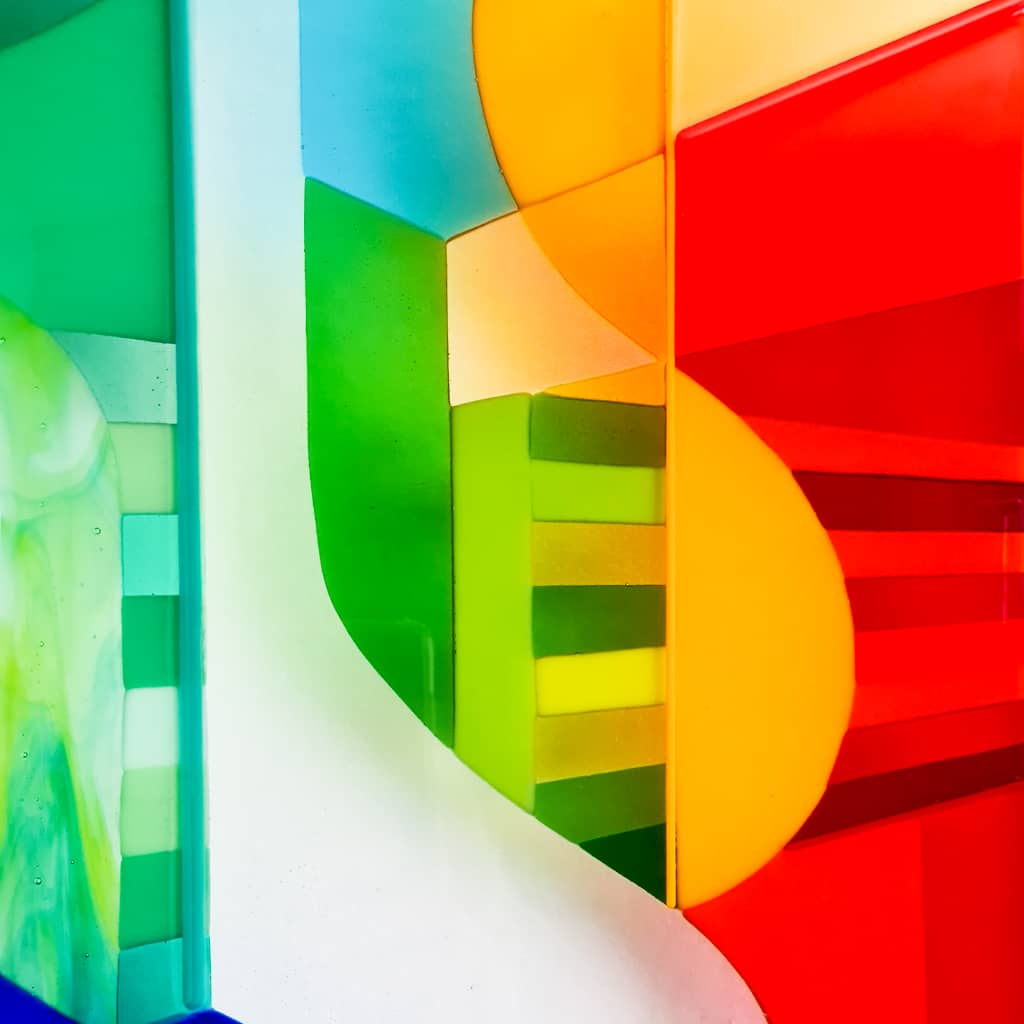
Today, in the world of luxury art glass, few stand out like Linda. Her signature “Hard Edge” style brings clarity, precision and intense colour into the medium. But more than technique and artistry, what she offers is continuity of an ancient tradition.
She is the glassmaker who transforms material and light; the artist whose clients become part of the story; the designer whose work invites colour into luxury homes.

When you engage with Linda you are not simply buying a piece. You are joining the lineage of glass as luxury, wonder and legacy.
Her commissions are personal, because, as in the past, elite clients commissioned unique pieces.
And today those clients value the story, the craftsmanship and the sense of ownership and meaning that brilliant original glass confers.
She blends that modern experience with ancient prestige, with your home at the centre of the story.

And the piece of glass itself becomes not just something to see, but something to feel.
Light captured, colour held, legacy created.
And the invitation to you
If you’ve imagined glass as “just a material,” then pause.
Imagine instead molten sand, fire, human hands, colour, transparency, light.
Then imagine that transformed object standing in your living space.
Quietly shimmering. Holding history. Emitting presence.

You become a part of something far older and richer than you might think.
You are part of the magic of glass. The luxury of glass. The legacy of glass.
And you are part of the story that Linda is writing.
Leave a comment
Hard Edge glass art blog
View all


ABOUT THE AUTHOR
“Hi, I’m Kevin, Linda’s lifelong soulmate. I’m a professional scriptwriter by trade, for which I’ve won many awards.
My mission is to bring Linda’s genius for colour & form into plain words everybody understands and enjoys.”
